The Perfect Storm summary and study guide

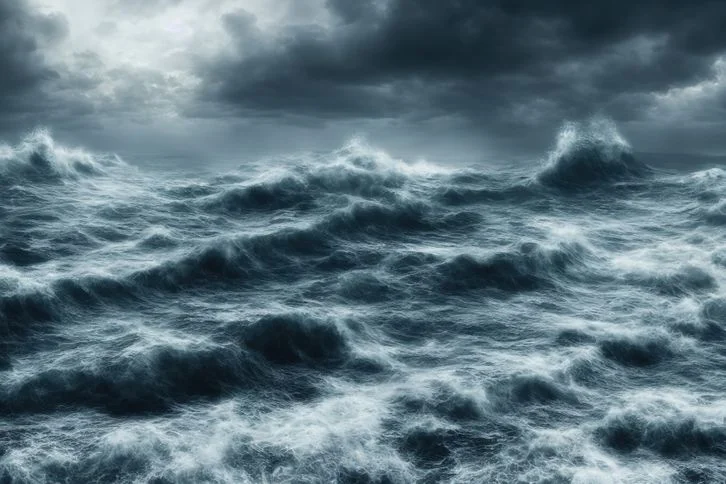
Sebastian Junger’s nonfiction book is a strong choice for students because it reads like a tense sea story while also explaining weather, labor, risk, grief, and community. The book follows the Andrea Gail, a Gloucester swordfishing boat lost during the 1991 Halloween storm, but it also studies the people and systems around that disaster. A useful The Perfect Storm summary should separate verified events from reconstruction, since no one survived from the Andrea Gail to describe the final moments.
Here are the quick details students usually need before reading.
| Detail | Information |
| Author | Sebastian Junger |
| Subtitle | A True Story of Men Against the Sea |
| Genre | Creative nonfiction and literary journalism |
| Main setting | Gloucester, Massachusetts, and the North Atlantic |
| Central event | The loss of the Andrea Gail during the 1991 storm |
| Main focus | Fishing culture, dangerous work, weather science, rescue, and loss |
About Sebastian Junger
Sebastian Junger is an American journalist, author, and documentary filmmaker. His official biography describes him as the bestselling author of several books, including this one, War, Tribe, Freedom, and In My Time of Dying, and notes his work as a journalist covering major international stories. It also lists major recognitions, including a National Magazine Award and a Peabody Award.
Junger’s background matters because the book does not read like a simple disaster report. He combines interviews, technical explanation, local history, and scene-based narration. Since the Andrea Gail vanished, he cannot know every final action on board. Instead, he builds a careful account from weather records, fishing knowledge, Coast Guard rescue details, and testimony from people who knew the crew.
Historical background of The Perfect Storm
The 1991 Halloween storm formed when several weather forces interacted over the North Atlantic. NOAA’s National Weather Service describes the Andrea Gail as a 72-foot commercial fishing vessel believed to have sunk sometime after midnight as the storm intensified, taking its six-man crew with it. Outside’s retrospective reports offshore waves reaching about 100 feet, although official measurements varied by buoy and location.
For Gloucester, the disaster was not just a news event. The city had a long fishing history, and the danger of the work shaped family life, money, pride, and grief. Junger treats that background as part of the story, not decoration. Why would men keep going back to such risky water? The book suggests that the answer includes pay, identity, skill, loyalty, and the hard pull of a life built around the sea.
The Perfect Storm summary
This section follows the book’s main movement rather than pretending the Andrea Gail’s last minutes can be fully known. Junger begins on land, where Gloucester’s bars, docks, families, and boat owners show the social world behind the trip. The crew members are introduced as working men with debts, relationships, hopes, habits, and reputations.
The Andrea Gail leaves for swordfish and has poor luck at first. Captain Billy Tyne pushes farther out, toward the Flemish Cap, where the fishing improves. By late October, the vessel is returning with a large catch, while the weather grows dangerous across the North Atlantic. The book then widens to include rescue efforts involving the sailboat Satori and an Air National Guard helicopter, which helps readers imagine the storm’s force without inventing a full eyewitness account from the lost boat.
The culture of Gloucester
Gloucester appears as a place where fishing is work, identity, and inheritance. The men who leave port are not abstract heroes; they are sons, partners, fathers, friends, rivals, and workers trying to make enough money in a dangerous trade. Junger shows how the waterfront creates a code of toughness, but he does not make that toughness look simple.
The culture also contains pressure. A good catch can change a season, while a bad trip can leave a crew nearly broke. Boat owners, captains, and deckhands share risk unevenly, and families pay the emotional cost long before any tragedy occurs. The result is a community that respects skill but lives close to loss.
The voyage of the Andrea Gail
The Andrea Gail is owned by Bob Brown and captained by Billy Tyne. According to the plot account from LitCharts, the crew includes Bobby Shatford, Bugsy Moran, David “Sully” Sullivan, Dale “Murph” Murphy, and Alfred Pierre. The same summary notes that the trip starts poorly, then improves after Tyne heads toward the Flemish Cap.
The voyage is important because it shows how ordinary decisions become frightening under extreme conditions. Tyne wants fish, the crew wants a profitable return, and the boat is far from easy help. Junger does not frame the trip as foolish in a simple way. He shows how weather, timing, distance, financial need, and professional confidence combine until the route home becomes deadly.
The Perfect Storm
This part of the book explains the rare weather pattern that trapped boats and rescuers in impossible conditions. LitCharts summarizes the convergence as involving Hurricane Grace, a Canadian high-pressure system, and a nor’easter, with meteorologist Bob Case using the phrase that gives the book its title.
Junger’s storm writing works because it is both scientific and emotional. He explains wind, waves, water temperature, vessel stability, and hypothermia without turning the book into a textbook. At the same time, the sea becomes more than scenery. It is a force that exposes how small human plans can be when nature moves at full scale.
The search and rescue
The search-and-rescue chapters broaden the story beyond the missing fishing boat. The Satori sends a mayday, and Coast Guard crews work in conditions that are almost beyond safe rescue. LitCharts describes how the cutter Tamaroa and helicopter crews help rescue the Satori’s crew, while an Air National Guard helicopter later ditches during a separate rescue effort.
These scenes matter because they give the reader verified human action inside the same storm system. Since the Andrea Gail’s final moments are unknowable, the rescues show what similar wind, waves, fear, and cold could do to people at sea. The courage is real, but it is not romantic. Rescue depends on training, machinery, judgment, luck, and bodies that can fail.
The aftermath
After the storm, the book returns to absence. Families wait, officials search, and Gloucester slowly understands that the Andrea Gail will not return. LitCharts notes that aircraft search for the boat and that only scattered items, including fuel barrels and a distress beacon, are found near Sable Island.
The final effect is quiet rather than neat. There is no recovered wreck, no survivor’s statement, and no final confession from the sea. A The Perfect Storm summary has to preserve that uncertainty because the book’s emotional power depends on it. The ending leaves readers with grief, unanswered questions, and a clearer view of the price behind dangerous work.
The Perfect Storm analysis
A strong analysis of The Perfect Storm should focus on how Junger turns a maritime disaster into a study of risk. The book asks what people do when their work depends on forces they can understand only partly. It also asks how a community absorbs loss when danger is familiar but still unbearable.
The central conflict is not only men versus nature. It is also human ambition versus uncertainty, skill versus chance, and private grief versus public legend. Junger’s method is careful because he respects the boundary between known fact and likely reconstruction. Students writing essays on the book can use that boundary as one of the main points of interpretation.
Major themes in The Perfect Storm
The themes are easier to study when they are tied to scenes and choices. Junger does not pause the story to lecture the reader. Instead, he lets weather reports, conversations, rescue attempts, and family memories reveal the larger ideas.
- Risk and labor appear through fishing as skilled work where danger is built into the job, not added from outside.
- Nature and human limits appear when weather science explains the storm without giving anyone control over it.
- Community and grief become visible because Gloucester’s closeness makes loss public, shared, and difficult to escape.
- Masculinity and pride shape how the men value toughness and competence, though those values can hide fear and vulnerability.
- Storytelling and uncertainty matter because Junger must narrate an event whose center cannot be fully witnessed.
Key figure profiles
The book includes several figures whose roles help students track the story. Some are crew members, some are family members, and some are rescuers or observers. This table gives a quick study reference without reducing them to simple labels.
| Figure | Role in the book | Why this figure matters |
| Billy Tyne | Captain of the Andrea Gail | Represents leadership, pressure, and the difficult judgment calls of commercial fishing |
| Bobby Shatford | Crew member | Connects the voyage to family, debt, romance, and a hoped-for future on land |
| Bob Brown | Boat owner | Shows the business side of fishing and the tensions around profit and safety |
| Linda Greenlaw | Captain of the Hannah Boden | Offers professional insight into swordfishing and the sea conditions around the fleet |
| Karen Stimpson | Satori crew member | Helps show the storm from the viewpoint of people who survive it |
| Rick Smith | Pararescueman | Represents the risks rescuers face while trying to save others |
These figures help show why the book is not only about one lost boat. It is about a network of workers, loved ones, experts, and rescuers caught in the same harsh system. For students comparing nonfiction storytelling with research-based writing, a literature review service can also be useful for organizing outside sources without losing the main argument.
Symbols and motifs
Junger’s nonfiction style uses recurring details that carry meaning. These details are not fictional symbols in the usual novelistic sense, but they still guide the reader’s interpretation. They also help turn technical material into a human story.
- The sea represents livelihood, danger, mystery, and the force that gives and takes.
- Weather reports show the human desire to predict disaster before it arrives.
- The boat stands for work, trust, isolation, and the thin boundary between safety and exposure.
- Radio contact marks connection, warning, silence, and the terror of losing communication.
- Debris becomes the only physical evidence left after lives and stories disappear.
In a The Perfect Storm analysis, these motifs can support a claim about uncertainty. The book keeps returning to signals, tools, and objects that should make the world knowable. Yet the most important truth remains incomplete.
Final thoughts
The book remains useful for students because it combines plot, science, biography, and ethical restraint. It respects the crew of the Andrea Gail by giving them social and personal context, not by pretending to know what cannot be known. That restraint makes the tragedy feel more serious.
When reviewing the book, pay particular attention to the following points.
- How Junger distinguishes verified facts from reconstruction.
- How fishing culture shapes the crew's decisions
The book also gives students several essay angles. A paper could focus on dangerous labor, Gloucester’s fishing culture, weather as an uncontrollable force, or the limits of nonfiction reconstruction. Students who need help shaping an argument can use SpeedyPaper’s write my paper for me support as a starting point for planning, drafting, or reviewing a study-guide essay.
The best reading of the book keeps two ideas together. The Andrea Gail’s story is specific, local, and personal. At the same time, it speaks to a larger human problem: people make plans inside systems too powerful to fully command.
FAQ
What is the book mainly about?
The book is mainly about the Andrea Gail, a Gloucester swordfishing boat lost during the 1991 Halloween storm, and the people connected to that event. It also explains fishing culture, weather science, rescue work, and the grief left behind.
Is the book fiction or nonfiction?
The book is nonfiction, but it uses narrative techniques often found in novels. Junger reconstructs some possibilities carefully because the crew and boat were never recovered.
Why is the ending unresolved?
The ending is unresolved because no one from the Andrea Gail survived to report what happened in the final moments. That uncertainty is part of the book’s meaning, since the sea leaves only fragments, evidence, and mourning.
Related articles