The Paper Menagerie summary and study guide

This guide gives a clear path through The Paper Menagerie without turning the story into a flat plot outline. The story is short, but it carries real emotional and cultural weight. It helps to separate the childhood scenes, the teenage rejection, the mother’s silence, and the final letter.
Ken Liu’s story is often studied because it blends family realism with a quiet magical element. The summary below follows the story’s main movement, while the analysis sections explain characters, themes, and symbols for class discussion or an essay draft.
| Quick detail | What to know |
| Author | Ken Liu |
| Genre | Magical realism, speculative fiction, literary short story |
| First publication | 2011 in The Magazine of Fantasy & Science Fiction |
| Main character | Jack, a Chinese American boy who grows into an adult narrator |
| Central conflict | Jack rejects his mother’s language and culture, then understands her love too late |
About Ken Liu
Ken Liu is an American writer, translator, and editor known for speculative fiction that often blends technology, history, language, and family memory. His work includes novels, short fiction collections, and translations that have helped bring Chinese science fiction to a wider English-language audience.
This is one of his most widely studied short stories. It won major speculative fiction awards and is often discussed for the way it combines magical realism with immigrant family experience. Instead of using fantasy to build a large invented world, Liu uses one intimate magical detail: paper animals that come alive through a mother’s care.
For students, that matters. The plot is clear, but the narrator understands his mother’s love only after he has spent years pushing it away.
The Paper Menagerie summary
The story begins with young Jack. His mother comforts him by folding a tiger from leftover wrapping paper and breathing life into it. The tiger, Laohu, moves, plays, and becomes Jack’s companion. His mother then makes more animals, and the house becomes a private world of language, care, and imagination.
As Jack grows older, outside judgment changes how he sees that world. A move exposes him to racist comments, and a boy named Mark mocks the paper tiger as cheap trash. Jack starts to feel embarrassed by his mother’s accent, food, and language.
Jack demands English, American food, and store-bought toys. His mother tries to explain that the Chinese word she uses for love feels deeper to her than its English equivalent, but Jack rejects the explanation. Over time, the paper animals are packed away, and their closeness fades.
Jack’s mother becomes ill years later. Before her death, she asks him to remember her on Qingming, a Chinese festival connected with honoring the dead. He does not fully listen. After her death, Jack and Susan find the old paper animals in the attic. Two years later, on Qingming, Laohu comes alive again and unfolds to reveal a letter written inside its body.
The letter gives Jack the truth about his mother’s earlier life. She had survived poverty, separation, and exploitation before coming to the United States. A summary of The Paper Menagerie should therefore end with belated recognition, not simple closure. Jack cannot undo the silence, yet he finally understands what his mother had tried to give him.
The magic of childhood
In childhood, the magic seems natural. Jack does not need a scientific explanation for the paper animals because they belong to the emotional logic of his home. His mother folds discarded paper into living creatures, and that act turns ordinary material into love, memory, and play.
Laohu is the most important animal because he is both toy and companion. He also carries language. When Jack speaks to him in Chinese, the tiger belongs to the same world as his mother’s songs, stories, and care. The magic works because Jack still accepts that world.
This childhood section is warm, but it is not only nostalgic. It shows what Jack loses later. Childhood is presented as a time when cultural identity can feel joyful before shame teaches him to divide himself.
The shift and rejection
The shift begins when Jack sees himself through other people’s prejudice. The neighbors’ comments and Mark’s insult make him feel that being Chinese is something to hide. Mark’s action figure also creates a contrast between mass-produced toys and handmade paper animals.
Jack’s rejection becomes direct at dinner. He asks whether his face looks Chinese in a way that repeats the racist language used against him. Then he tells his mother to speak English and wants food that looks more American. The Paper Menagerie theme of assimilation appears sharply here, because Jack does not simply learn another culture. He tries to erase the part of himself connected to his mother.
His father also plays a complicated role. He wants Jack to adjust and avoid pain, but his support for English deepens the mother’s isolation. The story shows how outside pressure can enter a family and reshape love into embarrassment.
The silent years and tragedy
As Jack grows older, silence replaces conflict. His mother still lives in the house, but her words no longer reach him. She has lost the language in which she can express love most fully, and Jack has lost the patience to hear it.
The paper animals stop being part of daily life. Jack puts them away, and his mother eventually stops making more. This is one of the saddest movements in The Paper Menagerie because nothing dramatic has to happen for the relationship to weaken. Distance grows through ordinary refusal.
When his mother becomes seriously ill, Jack still does not understand the full meaning of her request about Qingming. He is present, but emotionally late. The tragedy is not only that she dies. It is that she dies before he is ready to listen.
The letter and redemption
The letter changes Jack’s understanding of the whole story. Written inside Laohu, it turns the paper tiger into a container for memory. The animal that once carried play now carries testimony.
Through the translated letter, Jack learns about his mother’s life in China and Hong Kong, including the suffering that shaped her before she became his mother. Her love was not simple sentiment. It was tied to survival, loss, labor, and the hope that her child might have a better life.
The ending offers partial redemption, not full repair. Jack receives the message, but he cannot answer her in the way he should have years earlier. That is why the ending feels so painful. The final act of understanding arrives with love, but also with regret.
The Paper Menagerie analysis
The Paper Menagerie analysis depends on one central idea. The story uses fantasy to make emotional truth visible. The paper animals are magical, but the conflict is familiar: a child wants acceptance, a mother wants connection, and language becomes both bridge and barrier.
The story also resists a simple lesson about appreciating one’s heritage. Jack’s shame comes from real social pressure, not random cruelty. That makes his rejection understandable, though still painful. A strong reading should hold both points at once.
Key characters
The Paper Menagerie has few characters, but each one affects Jack’s relationship with identity. The table below gives a quick study reference. It can also help when planning body paragraphs for an essay.
| Character | Role in the story | Why the character matters |
| Jack | Narrator and son | His changing attitude toward his mother creates the central conflict |
| Jack’s mother | Chinese immigrant mother | Her language, origami, and letter carry the emotional center |
| Jack’s father | American father | He supports assimilation and often mediates between Jack and his mother |
| Mark | Childhood bully | His cruelty pushes Jack toward shame and rejection |
| Susan | Jack’s girlfriend | She helps rediscover the paper animals after the mother’s death |
The Paper Menagerie characters are not built through long backstories, except for the mother’s letter near the end. Instead, they are defined by what they reveal about belonging. Jack wants to be accepted. His mother wants to be heard. Mark represents the social cruelty that makes Jack turn against himself.
Major themes
The story works well for essays because its themes are connected rather than separate. A strong paragraph can start with language, then move into identity, family, or memory. Before choosing a thesis, look at how these ideas overlap.
- Cultural identity becomes fragile when Jack learns to see his Chinese heritage as a source of embarrassment.
- Language carries emotion because Jack’s mother can express certain feelings more fully in Chinese than in English.
- Family love can survive rejection, but it can also be damaged by silence and delay.
- Racism shapes private life by making Jack ashamed inside his own home.
- Memory returns through objects, especially the paper animals that outlast childhood.
These themes explain why The Paper Menagerie has remained useful in classrooms. It gives students a concrete plot, but it also opens questions about immigrant families, mixed identity, translation, grief, and apology. What happens when a child needs belonging so badly that he rejects the person who loves him most?
Symbolism of the origami
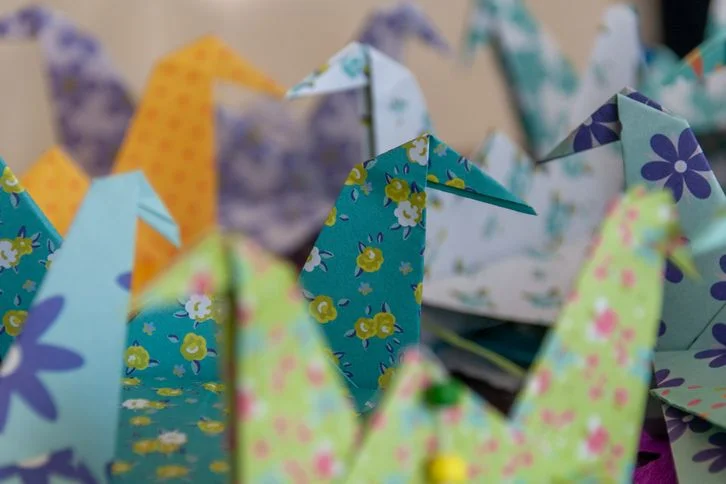
The origami animals are the story’s strongest symbol. They begin as toys, then become evidence of the mother’s creativity and sacrifice. Their handmade nature matters because Jack later compares them to expensive store-bought toys.
The symbols can be read in several connected ways. Each reading adds another layer. For an essay, it is usually best to focus on one or two meanings and explain them closely.
- The paper animals symbolize maternal love because Jack’s mother gives life to them through breath, time, and care.
- They symbolize cultural inheritance because they connect Jack to the Chinese language and family tradition.
- They symbolize fragility because paper can tear, fold, fade, or be packed away.
- They symbolize memory because Laohu preserves the mother’s final message until Jack is ready to receive it.
The paper tiger’s repair is especially important. Mark tears Laohu, but the mother later fixes him. That quiet act shows love continuing after rejection, and it prepares for the final letter.
Best essay topics on The Paper Menagerie
A good topic should be narrow enough for a short literary essay. The strongest essays connect a symbol, scene, or relationship to a larger theme. The topics below are designed for classroom writing.
- How does Laohu change from childhood toy to symbol of memory?
- How does Ken Liu show the emotional cost of assimilation through Jack’s relationship with his mother?
- Why does language matter so much in the story’s portrayal of love?
- How do Mark’s insults affect Jack’s view of his own identity?
- What role does the mother’s letter play in changing the reader’s understanding of the plot?
- How does magical realism make the family conflict more powerful?
- Is Jack responsible for the distance between himself and his mother, or is social pressure the main cause?
- How does the story compare handmade art with consumer culture?
- Why is the ending moving even though it does not fully repair the relationship?
- How does Liu use silence to show grief, shame, and regret?
If an assignment feels too broad, choose one scene and one claim. A paper could focus only on the dinner argument, the attic discovery, or the final letter. Students who need help shaping a thesis may also use a paper writing service as a support option, especially when comparing several interpretations.
Final thoughts
The Paper Menagerie is powerful because its fantasy is quiet. A mother brings paper animals to life, but the deeper magic is her attempt to make love visible to a child who later rejects it.
For class discussion, focus on Jack’s emotional growth rather than judging him too quickly. His choices hurt his mother, but racism and pressure also shape his shame. The ending offers recognition, not comfort. Jack finally receives his mother’s story after years of distance, which makes the final letter both tender and devastating.
FAQ
What is The Paper Menagerie about?
The story is about Jack, a Chinese American boy whose mother makes living origami animals for him. As he grows older, he becomes ashamed of her language and culture, rejects her, and only understands her love after reading a letter hidden in his paper tiger.
What is the main conflict in the story?
The main conflict is Jack’s struggle between his childhood bond with his mother and his desire to assimilate into American culture. His rejection cuts off language, affection, and family memory.
What do the paper animals symbolize?
The paper animals symbolize love, cultural inheritance, memory, and fragility. Their ability to move makes Jack’s mother’s care visible in a magical but emotionally believable way.
Why is the letter important?
The letter reveals the mother’s past and explains the depth of her love for Jack. It also forces Jack to confront what he ignored while she was alive.
What is the best way to write about this story?
Start with one focused claim about identity, language, family, or symbolism in The Paper Menagerie. Then use one or two scenes to support the point.
Related articles