Project Hail Mary summary and study guide

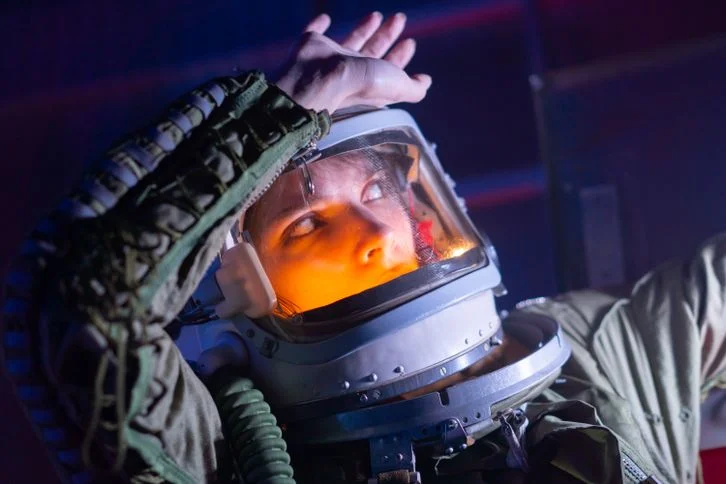
Understanding Project Hail Mary requires tracking scientific ideas, narrative arcs, and individual character motivations. Studying this book helps high school and college students prepare for class discussions, write literary papers, and analyze complex themes.
Examining the core publication details provides essential background context before reviewing the detailed plot events and character interactions. The list below outlines the basic factual specifications of the novel for quick reference.
| Detail | Information |
| Title | Project Hail Mary |
| Author | Andy Weir |
| Publication Year | 2021 |
| Primary Genre | Hard Science Fiction |
| Point of View | First-person limited narrative |
| Primary Setting | Earth, Tau Ceti, and the Hail Mary starship |
About Andy Weir
Andy Weir is an American science fiction author who gained global recognition with his debut novel, The Martian. Before writing full time, he spent two decades working as a software engineer, a background that directly shapes his technical approach to narrative structure.
His work fits within the hard science fiction subgenre, prioritizing real physics, chemistry, and engineering principles. His plots often feature solitary protagonists using mathematics, empirical logic, and practical problem-solving to survive severe hazards in deep space.
After sharing early fiction independently on his personal blog, Weir published Project Hail Mary in 2021. The novel pairs detailed scientific calculations with clear prose, making complex STEM concepts easy for students and general readers to understand.
Project Hail Mary summary
The primary plot follows an urgent interstellar mission designed to prevent global environmental catastrophe on Earth. The story uses a dual-timeline structure, alternating between real-time events aboard a starship and recovered memories from Earth.
Awakening and amnesia
The protagonist wakes up inside a sterile laboratory module with total memory loss and two deceased crewmates. By measuring gravitational pull inside the cabin, he determines that he is in deep space rather than on Earth.
As environmental triggers restore his memory, he recalls his name, Ryland Grace, a former molecular biology researcher working as a middle school science teacher. He realizes he is the sole survivor aboard the starship Hail Mary, responsible for carrying out a critical mission alone.
Inspecting the ship, Grace finds automated medical equipment that sustained him during a long coma. He accesses the primary terminal to review mission files detailing spaceflight mechanics, life support data, and scientific testing protocols.
The Astrophage crisis
Grace recalls the disaster threatening Earth: an alien microscopic organism named Astrophage was absorbing solar energy, threatening a fatal global ice age. Astronomers detect the Petrova line, an infrared emission extending between the Sun and Venus.
Administrator Eva Stratt recruited Grace due to his research on non-DNA life. Given absolute legal authority, Stratt oversaw the construction of an interstellar ship powered by harvested Astrophage to reach Tau Ceti, the only nearby star unaffected by the organism.
Because the mission could not carry enough resources to return its crew safely, it was designed as a one-way journey. Four automated Beetle probes were intended to carry the scientific findings back to Earth. After a laboratory explosion kills the mission’s two primary scientists, Stratt orders Grace to replace them. He refuses, but she has him confined, drugged, and sent on the mission against his will.
First contact and Rocky
Upon arriving at Tau Ceti, Grace encounters an alien starship. He connects the two vessels and meets Rocky, a five-limbed alien with a hard, stone-like carapace. Rocky communicates through musical notes, perceives his surroundings via sonar, and is the sole survivor of a crew from Erid facing the same solar crisis.
Grace gradually builds a translation system by matching Rocky’s musical sounds with meanings and recording the correspondences in software. Despite physical environmental differences, they construct a pressurized shared chamber to work together safely.
Grace learns that Eridians excel at material engineering but lack understanding of radiation physics. Using durable xenonite tools supplied by Rocky, Grace repairs damaged components aboard his ship.
Scientific triumph
Investigating Tau Ceti, Grace and Rocky discover a predatory microbe named Taumoeba that feeds on Astrophage. This organism offers a biological solution to restore the suns of both Earth and Erid.
Grace builds a sampling apparatus to harvest microbes from a local planet's atmosphere. After establishing breeding tanks inside his laboratory, Grace and Rocky use selective breeding to develop a strain that can survive the nitrogen-rich conditions associated with Astrophage reproduction near Earth and Erid.
Grace packages four automated Beetle probes with Taumoeba samples and detailed instructions so they can return the discovery to Earth after the mission.
The ultimate sacrifice
After separating from Rocky and beginning his return toward Earth, Grace discovers that the evolved Taumoeba-82.5 can pass through xenonite. When Rocky's ship stops producing an engine flare, Grace realizes the organism has escaped into Blip-A's xenonite fuel tanks and consumed its Astrophage, leaving Rocky stranded.
Grace abandons his planned return to Earth and changes course to rescue Rocky, knowing that the decision will prevent him from returning home. He rescues Rocky from his disabled vessel and sends the Beetle probes carrying Taumoeba samples toward Earth.
Grace accompanies Rocky to Erid, where he helps save the Eridian star system. Settling into a custom habitat adapted for human biology, he becomes a science teacher for Eridian children and eventually learns that Earth's Sun has recovered.
Project Hail Mary analysis
Literary study reveals how character development, structural themes, and scientific logic intersect within the text. The story combines hard science with human emotional connections to drive narrative resolution.
Key character profiles
Character interactions propel the plot forward while contrasting individual motivations with planetary survival needs. Character analysis reveals how Ryland Grace transforms from an unwilling civilian into a decisive leader under pressure.
The table below details the primary characters, their roles, key traits, and their influence on story events.
| Character | Primary role | Key traits | Narrative significance |
| Ryland Grace | Protagonist and former teacher | Observant, empathetic, cautious | Evolves from a reluctant participant into a self-sacrificing hero |
| Rocky | Eridian engineer and friend | Skilled, loyal, highly intelligent | Demonstrates cross-species cooperation through shared scientific logic |
| Eva Stratt | Director of Task Force Hail Mary | Direct, pragmatic, uncompromising | Represents utilitarian decision-making during existential global emergencies |
Eva Stratt operates with singular focus, prioritizing the continuation of the human race over individual civil liberties or administrative laws. Her direct approach contrasts sharply with Grace's initial reluctance to take risks.
Grace prefers academic environments where outcomes are predictable and safe. His evolution occurs gradually as emergency situations force him to accept responsibility for decisions affecting entire civilizations.
Rocky provides both practical assistance and emotional stability aboard the vessel. His presence prevents Grace from suffering psychological decline caused by prolonged social isolation.
Major themes
Multiple thematic concepts appear throughout the book, influencing character decisions and overarching plot developments. A thematic analysis shows how international cooperation and scientific reasoning drive success.
The list below highlights the primary themes explored across the story.
- International and cross-species cooperation demonstrates how survival requires overcoming linguistic, physical, and cultural barriers.
- Scientific problem-solving highlights empirical experimentation, logical reasoning, and adaptability during unexpected emergencies.
- Personal sacrifice and moral duty illustrate the personal cost of protecting future generations and prioritizing global needs.
- Companionship and shared purpose show how meaningful connections form even in solitary environments.
The theme of cooperation extends beyond the relationship between Grace and Rocky. On Earth, nations suspend military conflicts and economic rivalries to allocate industrial resources toward starship construction.
Scientific methodology functions as a narrative engine rather than passive background detail. The protagonist resolves life-threatening situations by observing physical phenomena, forming testable hypotheses, and executing structured experiments.
Moral choices in the novel rarely present easy options. Eva Stratt accepts public condemnation to complete the Hail Mary, while Grace sacrifices his desire to see Earth again to save his friend.
Narrative mechanics and scientific realism
A scientific analysis of the text shows how the author combines several techniques to ground the fictional narrative.
- Real physics, chemistry, and biology underpin the fictional plot instead of unexplained technology.
- Grace solves problems using the scientific method through observation, hypothesis testing, and controlled experiments.
- The dual timeline gradually restores Grace's memories while explaining the mission and his background.
- Scientific details directly influence survival and drive major plot developments.
Instead of using unexplained gravity generators or faster-than-light travel, the story creates artificial gravity through rotation and draws on orbital mechanics, relativity, and energy-conversion concepts.
Grace solves problems using the scientific method, testing hypotheses through observation and controlled trial procedures. Flashback sequences explain the origin of specialized ship equipment while revealing Grace's personal background. This dual structure maintains tension in the current timeline while building context for his choices.
The narrative structure mirrors the process of memory recovery following medical trauma. As Grace's neurological function stabilizes, flashbacks occur in relative chronological sequence, giving context to physical items he discovers inside the cabin.
Hard science functions as both setting and plot catalyst. Minor details, such as radiation shielding thickness or gas pressure ratios, directly affect whether characters survive critical scenes.
Top essay topics on Project Hail Mary
Writing papers on this novel requires students to evaluate character development, moral choices, or scientific themes. Prompts focused on character growth examine how Grace overcomes personal fear, while ethical prompts evaluate Eva Stratt's leadership style.
Students who need help organizing evidence for a longer assignment may consult a professional research paper writing service while keeping their own interpretation and close reading at the center of the paper.
The list below provides essay prompts suitable for student assignments and classroom discussions.
- Examine the ethical choices made by Eva Stratt and evaluate whether her utilitarian actions were justified.
- Compare Ryland Grace at the beginning of the story with his character at the conclusion.
- Analyze how language and communication methods build trust between Grace and Rocky.
- Discuss how the story presents empirical scientific methods as tools for survival.
- Evaluate the significance of Grace's choice to rescue Rocky instead of returning to Earth.
- Explore how prolonged isolation affects the choices made by both main characters.
When writing on these topics, students should support their arguments using direct textual evidence from the novel. Comparing events from the Earth flashbacks with events aboard the Hail Mary provides strong contrast for essays on character development.
Analyzing the contrast between human and Eridian biology offers good material for papers on communication and adaptation. Students can also evaluate how the author uses technical descriptions to maintain narrative pacing during problem-solving scenes.
Final thoughts
Studying Project Hail Mary offers students a clear example of how modern science fiction addresses human ethics, teamwork, and resilience. Through careful reading, students learn how technical problem-solving works alongside emotional choices.
The story demonstrates that logic and empathy are necessary tools when addressing complex challenges. Whether analyzing character choices or scientific principles, students gain valuable insights into literary structure and thematic development.
The novel remains a strong resource for literature classes examining speculative fiction, ethical decision-making, and scientific writing. The balanced narrative structure provides practical material for literary discussions, class presentations, and academic essays.
FAQ
What is the main conflict in the story?
The primary conflict involves finding a way to stop Astrophage from absorbing solar radiation and causing a global extinction event on Earth. Ryland Grace must use scientific research in space to find a biological solution before humanity perishes.
Why is Rocky important in Project Hail Mary?
Rocky provides essential engineering knowledge and personal companionship that enables Grace to survive his solitary mission. Their alliance allows them to solve complex scientific challenges that neither could resolve alone.
What happens at the end of the book?
Grace abandons his return to Earth and changes course to rescue Rocky. He sends the Beetle probes carrying Taumoeba to Earth, travels to Erid, and eventually becomes a science teacher there.
Is the science in the story realistic?
The plot relies on real principles of physics, chemistry, and thermodynamics to resolve story obstacles. The novel uses many real principles of physics, chemistry, and engineering, but Astrophage, Taumoeba, xenonite, and Eridian biology depend on speculative properties created for the story.
Related articles