Mexican Gothic summary and study guide

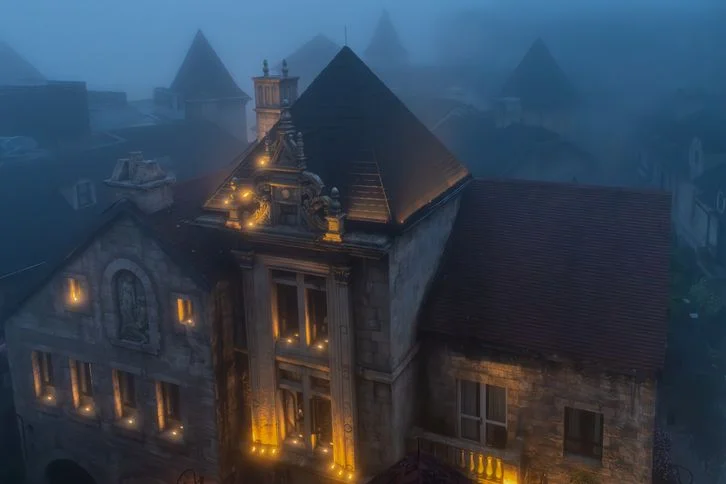
Blending classic gothic tropes with a mid-century Latin American setting, Silvia Moreno-Garcia's novel Mexican Gothic offers students a structured narrative filled with social commentary, historical tension, and psychological suspense. Set in 1950s Mexico, the story follows Noemí Taboada as she travels to an isolated mountain estate to check on her newly married cousin, Catalina. What begins as a family wellness check quickly turns into a struggle against an eccentric, controlling dynasty operating under sinister motives.
The table below outlines essential publishing details, historical settings, and core elements that define the book for academic review.
| Element | Details |
| Author | Silvia Moreno-Garcia |
| Publication Year | 2020 |
| Genre | Gothic Horror, Historical Fiction |
| Primary Setting | High Place, El Triunfo, Hidalgo, Mexico |
| Protagonist | Noemí Taboada |
| Major Conflicts | Autonomy vs exploitation, modernity vs tradition, human will vs systemic control |
About Silvia Moreno-Garcia
Silvia Moreno-Garcia is a Mexican-Canadian author known for blending speculative elements with detailed historical backgrounds. Born in Baja California, Mexico, she later moved to Canada, earning a master's degree in science and technology studies from the University of British Columbia. Her background in academic research informs her fiction, giving her narratives a grounded structure even when handling supernatural premises.
Published in 2020, this book brought her widespread recognition, earning accolades including the Locus Award for Best Horror Novel. Moreno-Garcia draws inspiration from classic nineteenth-century literature and mid-twentieth-century Mexican history. By shifting the traditional gothic setting from the English countryside to the misty mountains of Hidalgo, she creates a distinct atmosphere that directly critiques foreign extraction in Latin America. Her broader body of work spans multiple genres, consistently focusing on strong-willed protagonists who challenge entrenched power structures.
Mexican Gothic summary
Understanding the structure of the plot helps readers track how personal suspense links to larger symbolic themes. The story moves from urban socialite life to an oppressive, isolated manor where domestic control mirrors historical exploitation.
The distressing letter and arrival
The story opens in 1950 Mexico City. Noemí Taboada is a glamorous debutante who enjoys social parties, fashion, and academic pursuits in anthropology. Her routine changes when her father receives an urgent letter from her cousin, Catalina. Catalina recently married Virgil Doyle, an attractive Englishman, and relocated to his family's isolated estate, High Place, located near the mining town of El Triunfo. In her letter, Catalina claims her husband is poisoning her, mysterious voices speak through walls, and she desperately needs protection.
Fearing a public scandal and doubting Catalina's mental stability, Noemí's father sends Noemí to investigate. He promises to support her desire to attend graduate school if she handles the matter quietly. Upon arriving at High Place, Noemí encounters a grim environment starkly different from her lively home. Shrouded in perpetual fog, the house is cold, neglected, and devoid of modern conveniences like electric lighting or open communication.
The secrets of High Place
Noemí quickly realizes that the Doyle household operates under rigid rules enforced by Florence Doyle, the stern house manager. Conversations during meals are forbidden, smoking is restricted, and Noemí is granted only brief, strictly supervised visits with Catalina. Catalina appears sickly and bedridden under the care of a family doctor who diagnoses her with tuberculosis.
As Noemí spends time in the house, she interacts with the patriarch, Howard Doyle. Howard is an ancient, frail man obsessed with eugenics and racial purity. He expresses a disturbing fascination with Noemí's heritage, viewing non-European populations through a lens of intellectual inferiority. The only resident showing genuine kindness toward Noemí is Francis Doyle, Florence's quiet son. Through conversations with Francis and local townspeople in El Triunfo, Noemí learns about the family history. The Doyles acquired immense wealth during the nineteenth century by operating local silver mines, relying on exploited local laborers who suffered under harsh conditions. A devastating epidemic and a violent uprising eventually halted mining operations, leaving the family isolated in their decaying mansion.
The mycelium and the incestuous curse
The environment at High Place grows increasingly hostile as Noemí experiences vivid nightmares and shared hallucinations filled with golden light and wall-dwelling tendrils. She realizes these visions are physical phenomena caused by a pervasive subterranean fungus. The Doyles have cultivated a symbiotic relationship with an ancient mycelium strain, referred to as the Gloom. This biological entity infuses the house, allowing the family to preserve memories, control minds, and extend their lives across generations.
To maintain the strength of the mycelium and preserve power, the Doyles practice forced intermarriage, binding family members to the collective consciousness. Howard Doyle has survived for centuries by transferring his mind into younger male descendants. Virgil married Catalina to acquire her substantial inheritance to fund their failing estate. Because Catalina's body rejects the fungal integration, Howard decides Noemí possesses the biological resilience needed to rejuvenate the family line. Howard forces Noemí to marry Francis, intending to transfer his consciousness into Francis’s body after the ceremony and use Noemí to strengthen the family’s failing bloodline.
The fire and liberation
Trapped within the house as fungal spores begin invading her mind, Noemí searches for a way to break the family's control. She forms an alliance with Francis, who regrets his family's dark history and wishes to end their unnatural existence. Noemí also seeks help from Marta Duval, a local healer in El Triunfo, who provides a potent herbal tincture designed to disrupt fungal infections and clear the mind.
Francis obtains more of Marta’s remedy, helping Noemí resist the Gloom and prepare for escape. After the forced wedding ceremony, Noemí fights off Virgil and joins Francis in trying to free Catalina. Florence captures them and brings them back to Howard’s room, where the transfer ritual begins. Catalina attacks Howard, Francis shoots Florence, and Noemí shoots Howard before the three flee toward the underground chamber. Virgil follows them and fights Francis. Noemí sets Agnes’s remains on fire, weakening the Gloom. Catalina then stabs Virgil in the eye, and she and Noemí help the injured Francis escape while High Place burns.
Mexican Gothic analysis
Examining the novel from a literary perspective reveals how narrative choices turn traditional horror elements into social critique. The author uses structural symbolism to address real-world historical dynamics.
Major themes
Imperial exploitation forms the central thematic pillar of the text. The English Doyles represent foreign economic powers that extracted physical resources from Mexico while treating local communities as disposable labor. High Place stands as a physical monument to colonial greed, filled with imported English soil and decaying Victorian furnishings that resist integration into the surrounding environment.
Another prominent theme is the critique of eugenics and patriarchal control. Howard Doyle's obsession with blood purity and physical trait measurements reflects nineteenth-century pseudo-scientific theories used to justify racial hierarchies and social domination. The family treats women purely as vessels for inheritance or genetic continuation. Noemí's refusal to submit to the Doyle family's authority represents a direct rejection of both colonial superiority and patriarchal ownership. A critical evaluation demonstrates how the author merges classic horror with anti-colonial themes.
Key character profiles
The characters in the narrative embody contrasting cultural and social forces, driving the core thematic conflicts of the story.
Noemí Taboada represents modern, urban Mexico. Intelligent, fashionable, and independent, she uses her sharp perception and persistence to challenge the oppressive environment of High Place rather than acting as a passive victim.
Catalina Doyle serves as the initial victim of the estate. Sweet and imaginative, her rapid physical and mental decline underscores the destructive nature of her marriage to Virgil.
Howard Doyle acts as the primary antagonist. As an ancient patriarch preserved by the mycelium, his survival depends on exploitation, incest, and the enforcement of rigid racial hierarchies.
Virgil Doyle functions as Howard's cruel enforcer. Handsome on the surface but cold and manipulative underneath, he uses charm to trap Catalina and attempt to control Noemí.
Francis Doyle highlights the possibility of personal growth. Raised within a toxic environment, his gentleness and moral courage allow him to break away from his family's legacy to aid Noemí.
Literary devices and imagery
The narrative relies on carefully chosen visual motifs and gothic conventions to heighten tension and build symbolic depth throughout the book.
- The subterranean mycelium network serves as a central visual device, symbolizing how historic corruption spreads beneath the surface of apparent grandeur.
- The motif of the ouroboros, an ancient snake consuming its own tail, appears on family crests and doors, highlighting the incestuous, self-destructive nature of the Doyle line.
- Heavy fog, muted lighting, and damp wallpaper create a claustrophobic atmosphere that reflects the mental confinement experienced by the inhabitants.
- Glowing golden dust spores mark the blurring line between reality, memory, and hallucination during Noemí's nocturnal dreams.
The 5 best Mexican Gothic quotes
Key quotations throughout the text encapsulate the novel's core thematic arguments regarding control, freedom, and identity. The five selected passages below showcase critical narrative turning points and character motivations.
- "Noemí, just because there are no ghosts it doesn't mean you can't be haunted. Nor that you shouldn't fear the haunting." This passage reflects one of the novel's central ideas, suggesting that psychological trauma and painful memories can be as powerful as supernatural forces.
- "She was not good at following orders." This simple description of Noemí establishes her defining character trait, contrasting her independent spirit with the rigid obedience demanded at High Place.
- "The world might be a terrible place, but there were soft spots in it." Spoken during a rare moment of connection between Noemí and Francis, this line emphasizes the possibility of human empathy amidst pervasive darkness.
- "It's the house... It wasn't made for love, the house." The line emphasizes the oppressive atmosphere of High Place, portraying the estate as a place built on domination, fear, and exploitation rather than human warmth.
- "The future... could not be predicted... But they were young that morning, and they could cling to hope." The closing reflection underscores the novel's cautious optimism, suggesting that hope remains possible even after profound loss and suffering.
Top essay topics on Mexican Gothic
Students preparing lit analysis papers can examine several compelling thematic avenues. The ten essay prompts listed below offer focused angles suitable for high school essays, college term papers, or comparative literature assignments.
- Analyze how High Place functions as a physical symbol of foreign colonial exploitation in Mexico.
- Compare the character traits of Noemí Taboada and Catalina Doyle to examine how different women respond to patriarchal oppression.
- Examine the symbolic role of the subterranean mycelium in illustrating generational trauma and family corruption.
- Discuss how the author subverts classic nineteenth-century British gothic tropes within a twentieth-century Latin American context.
- Review the thematic critique of eugenics and scientific racism through the actions of Howard Doyle.
- Analyze the importance of setting, focusing on how fog, architecture, and lighting create atmosphere and suspense.
- Evaluate Francis Doyle's character arc as a struggle between family loyalty and moral responsibility.
- Discuss the contrast between the modern atmosphere of 1950 Mexico City and the archaic isolation of El Triunfo.
- Examine how dreams and hallucinations blur the boundaries between psychological perception and supernatural reality.
- Analyze the role of female solidarity between Noemí, Catalina, and local figures like Marta Duval in defeating systemic power.
When managing multiple coursework deadlines or analyzing complex literary texts like Mexican Gothic, turning to a professional paper writing service can help students organize research, refine outlines, and polish final drafts effectively.
Final thoughts
Silvia Moreno-Garcia's work stands out as an impactful contribution to contemporary literature, seamlessly combining classic gothic atmosphere with meaningful social critiques of colonialism, race, and gender. By placing a resilient Mexican female protagonist at the center of a traditional horror framework, the story challenges historical power structures while delivering an engaging narrative. For students analyzing the text, paying close attention to visual symbols, character motivations, and historical contexts will provide a deep understanding of how horror elements serve broader academic themes.
FAQ
What is the main conflict in the story?
The main conflict centers on Noemí Taboada's fight to save her cousin Catalina and escape High Place while resisting the Doyle family's attempt to absorb her into their fungal hive-mind network.
What does the fungus represent in the novel?
The subterranean fungus, or Gloom, represents generational corruption, colonial exploitation, and the parasitic nature of a family desperate to maintain wealth and life at the expense of others.
Why does Howard Doyle target Noemí?
Howard targets Noemí because Catalina cannot successfully join the Doyle lineage. He believes Noemí can strengthen the family's bloodline while allowing the Doyle consciousness to continue through future generations.
Does Francis survive the ending of the book?
Yes, Francis survives. He helps Noemí and Catalina resist the Doyles and escape through the underground chamber. Noemí sets Agnes’s remains on fire, and the three flee as High Place burns.
Related articles