Blood Meridian summary and study guide for students

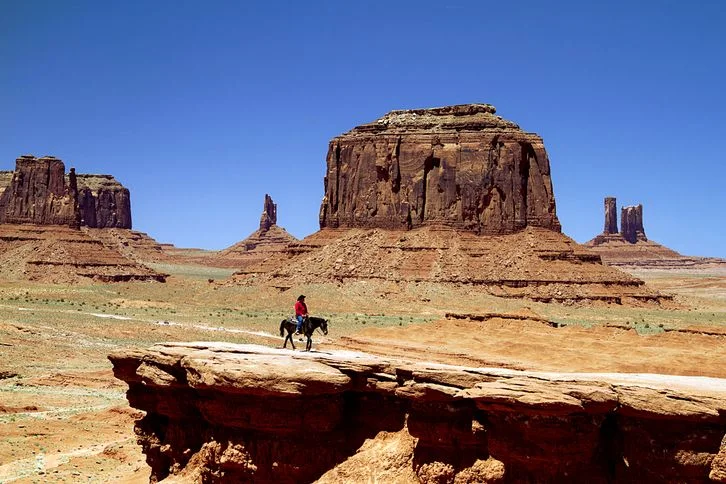
Blood Meridian follows a teenage runaway through the violent borderlands of the United States and Mexico in the late 1840s. The novel blends documented history with philosophical fiction, stripping the Western genre of its usual heroes and moral certainty. This guide gives you a direct overview of the plot, characters, themes, style, quotations, and essay directions without treating the book’s ambiguous moments as settled facts.
| Quick detail | Information |
| Author | Cormac McCarthy |
| Full title | Blood Meridian or the Evening Redness in the West |
| First published | 1985 |
| Setting | Texas, northern Mexico, and the U.S.–Mexico borderlands, mainly 1849–1850 |
| Genre | Historical fiction, anti-Western, Gothic Western |
| Central figure | The Kid, later called the man |
| Main conflict | The Kid’s involvement with the Glanton scalp-hunting gang and Judge Holden |
About Cormac McCarthy
Cormac McCarthy was born in Providence, Rhode Island, in 1933, grew up largely in Tennessee, and published his first novel, The Orchard Keeper, in 1965. After moving to El Paso, he shifted from Southern settings toward the American Southwest, a change that shaped Blood Meridian. A 1981 MacArthur Fellowship supported his research and writing before the novel appeared in 1985. McCarthy died in Santa Fe in 2023.
His fiction often places isolated people in severe landscapes where law, religion, and social order offer little protection. His prose can be spare in dialogue but elaborate in description, combining archaic vocabulary, biblical rhythms, and Spanish speech. McCarthy later reached a wider audience with All the Pretty Horses, No Country for Old Men, and The Road, which won the 2007 Pulitzer Prize for Fiction.
Blood Meridian summary
The youth and the birth of the Kid
The Kid is born in Tennessee in 1833, and his mother dies during childbirth. His father, a former schoolmaster, raises him, but the boy receives little meaningful education and develops an early attraction to violence. At fourteen, he leaves home and moves through the South before reaching Nacogdoches, Texas, in 1849. There he encounters Judge Holden, who falsely accuses a preacher and turns a crowd against him.
The Kid also meets Louis Toadvine after the two fight in the mud. Their hostility quickly becomes a rough partnership, and they help set fire to a hotel. Later, the Kid joins Captain White’s unauthorized military expedition into Mexico. A Comanche attack destroys the company, leaving the Kid among the few survivors, but Mexican soldiers eventually arrest him and take him to Chihuahua City.
Joining the Glanton gang
In prison, the Kid reunites with Toadvine. Toadvine arranges their release by enrolling them in John Joel Glanton’s gang, which has been hired to collect Apache scalps for bounty money. The group includes Judge Holden, the ex-priest Tobin, Black Jackson, Delaware warriors, and other armed men. The contract gives organized violence a legal appearance, but almost anyone soon becomes a possible victim.
The riders move through desert settlements and Indigenous lands, killing, scalping, trading, drinking, and fighting. The Kid participates in the gang’s crimes, yet scattered moments show that he does not fully share the Judge’s philosophy. He refuses to kill a wounded companion when ordered to do so and sometimes acts with a limited, uncertain mercy. These moments do not make him innocent, but they separate him from the Judge’s demand for total allegiance.
The meridian of blood
As the gang crosses northern Mexico, its original mission collapses into indiscriminate murder. The men attack Indigenous communities, Mexican civilians, and travelers, then present scalps for payment when possible. Towns briefly welcome them as protectors, but their conduct soon makes them fugitives. Praise and payment show how institutions can reward brutality before rejecting it.
Judge Holden becomes the gang’s intellectual and symbolic center. He lectures on war, fate, knowledge, nature, and power while recording plants, objects, and artifacts in his ledger. After sketching certain objects, he destroys them, suggesting that knowledge serves his desire to possess and control. The indifferent landscape dwarfs the riders even as the language gives their movement an apocalyptic scale.
The gang eventually takes control of a ferry near Yuma. Instead of protecting the crossing, its members exploit and rob travelers. Their violence has become a business without even the weak justification of the scalp contract.
The destruction of the gang and the final dance
Yuma attackers assault the ferry settlement and kill Glanton along with many gang members. The Kid survives, as do Tobin, Toadvine, Judge Holden, and a few others who become separated in the desert. Tobin urges the Kid to shoot the Judge, but he refuses. The Judge pursues the Kid and Tobin, turning the gang’s collapse into a personal contest over submission.
After reaching San Diego, the Kid is jailed and visited by the Judge, who accuses him of weakening the gang through mercy. The Kid is released, recovers, and later witnesses the executions of Toadvine and Brown in Los Angeles. He spends decades traveling and working until 1878, when the narrative calls him the man. At Fort Griffin, he meets the Judge again in a saloon.
The man rejects the Judge’s claim over him, but later finds him waiting inside an outhouse. McCarthy does not state exactly what happens there; witnesses react with horror, and the man does not reappear. The Judge returns to the saloon and dances, presenting violence as a ritual that outlives any victim.
Blood Meridian analysis
Major themes
A strong analysis should separate the Judge’s speeches from the novel’s own position. He is persuasive and learned, but that does not make him reliable. The book tests his ideas against the Kid’s resistance, victims’ suffering, and a landscape beyond human control.
- Violence and war. Violence appears as commerce, entertainment, policy, ritual, and personal impulse. The Judge calls war the deepest law of existence, while the narrative exposes its cost.
- Manifest Destiny and the anti-Western. The novel rejects the frontier as a clean story of courage and progress. Expansion is shown through invasion, racial violence, profiteering, and unstable borders rather than heroic settlement.
- Moral agency and complicity. The Kid shows occasional mercy, yet he remains part of the gang. His limited resistance raises a difficult question: does refusing total evil matter when a person still enables it?
- Knowledge as domination. The Judge studies languages, science, history, and nature, but his learning is tied to ownership. He wants nothing to exist outside his awareness or consent.
- Fate, ritual, and the dance. Repeated dances turn social celebration into a darker image of participation. The final dance suggests violence survives because communities make room for it.
Key characters and profiles
The novel rarely provides conventional psychological backstories. Characters are defined through action, speech, and their place within the gang. Their differences still represent competing responses to violence. The table below keeps those distinctions clear.
| Character | Role | Defining traits | Interpretive importance |
| The Kid / the man | Central character and gang member | Violent, silent, occasionally merciful | Tests whether incomplete resistance has moral value |
| Judge Holden | Scholar, fighter, and Glanton’s associate | Charismatic, hairless, learned, controlling | Embodies domination and a philosophy of endless war |
| John Joel Glanton | Leader of the scalp hunters | Ruthless, practical, increasingly lawless | Connects private brutality with paid political violence |
| Ben Tobin | Former Jesuit novice and gang member | Wary, observant, hostile to the Judge | Offers spiritual language without reliable salvation |
| Louis Toadvine | The Kid’s recurring companion | Criminal, impulsive, sometimes loyal | Shows unstable fellowship inside a violent world |
| Black Jackson | Gang member | Proud, dangerous, isolated | Exposes racial hostility within the gang itself |
Literary style and rhetoric
McCarthy’s prose moves between blunt action and highly elaborate description. He removes quotation marks, limits apostrophes, leaves some Spanish untranslated, and builds long sentences through repeated “and.” The result can feel oral, biblical, historical, and dreamlike at once. The publisher calls it a subversion of Western mythology, while critics link its rhetoric to Melville, Faulkner, epic poetry, and scripture.
The narration also shifts scale. A single act of cruelty may be described with cold directness, while mountains, storms, animals, and stars receive immense attention. This contrast prevents the human story from becoming the whole universe, even though the Judge speaks as if human conflict governs everything. Track who is speaking, what that person wants, and whether later events confirm or challenge the claim.
The 5 best Blood Meridian quotes
These short excerpts point toward central ideas without replacing close reading. Each one gains meaning from its speaker, setting, and position in the novel. Because page numbers vary by edition, locate the scene rather than relying on one page reference.
- “War is god.” The Judge compresses his worldview into three words, making conflict a supreme authority rather than a human choice.
- “Whatever in creation exists without my knowledge exists without my consent.” The statement reflects the Judge's belief that knowledge and control are inseparable.
- “He never sleeps, the judge.” The closing description makes him seem less like an ordinary man than a force that cannot be exhausted.
- “He is dancing, dancing.” Repetition transforms celebration into an image of violence continuing in public view.
- “The mystery is that there is no mystery.” The statement challenges the desire for a comforting hidden order behind suffering.
Top essay topics on Blood Meridian
A useful essay begins with a question that allows disagreement rather than a plot statement. It should connect a narrow pattern to a larger claim about history, ethics, language, or genre. These topics allow research while remaining focused enough for a clear thesis.
- How does the Kid’s occasional mercy complicate his responsibility for the gang’s crimes?
- Does the novel refute Judge Holden’s philosophy, or does it leave his claims disturbingly unresolved?
- How does McCarthy revise the mythology of Manifest Destiny and the heroic frontier?
- What role does the desert landscape play in limiting human ideas of power and order?
- How do contracts, bounties, and public celebrations turn violence into an institution?
- Why does the Judge collect, sketch, and destroy objects from the natural and human world?
- How does the final dance connect ritual, spectatorship, entertainment, and war?
- What is gained by the novel’s limited naming of figures such as the Kid, the Judge, and the ex-priest?
Final thoughts
Blood Meridian rejects a stable moral narrator, a comforting hero, and a clear divide between lawful society and outlaw violence. The Kid’s limited mercy does not erase his guilt, but it separates him from the Judge’s belief in total domination.
For an essay, trace one recurring image, speech, relationship, or institution across several scenes. Students can use the write my paper resource to shape observations into a thesis supported by evidence. A strong interpretation should preserve the novel’s ambiguity rather than claim that its ending or the Judge has one proven meaning.
FAQ
Is the novel based on true events?
The story draws heavily on historical violence in the U.S.–Mexico borderlands and on the real Glanton gang. McCarthy used historical sources linked to Samuel Chamberlain, but the Kid is fictional and the book reshapes history. It is historical fiction, not a documentary record.
Who is the main character?
The central character is first called the Kid and later the man. He joins the Glanton gang and participates in its violence, yet he occasionally shows mercy that Judge Holden treats as betrayal. His limited interiority makes readers judge him mainly through actions rather than confession.
What does the ending mean?
The ending strongly implies that the Judge kills the man, but the text does not describe the act inside the outhouse. The Judge’s return to the dance suggests the survival of his philosophy, though it does not prove that his philosophy is true. McCarthy leaves the physical event and its full symbolic meaning deliberately open.
Why is the book hard to read?
The difficulty comes from archaic vocabulary, untranslated Spanish, sparse punctuation, historical references, and graphic violence. Characters also explain themselves less than readers may expect from a conventional novel. Reading in short sections and noting repeated images can make the structure easier to follow.
What genre is the novel?
It is commonly classified as historical fiction, an anti-Western, and a Gothic Western. It uses familiar frontier elements such as deserts, riders, warfare, and border towns, then removes the reassuring moral pattern of the traditional Western. The result is closer to an epic tragedy than an adventure story.
Related articles